Modernization of Industrial Hydraulic Equipment

Modernization of Industrial Hydraulic Equipment

Breathing new life into aging machinery. Enhancing productivity operational reliability and energy efficiency by replacing obsolete hydraulic assemblies with cutting-edge fluid power solutions.

Modernization of Industrial Hydraulic Equipment

Extend Operating Life and Maximize Machinery Efficiency

Modernization of hydraulic machinery involves targeted revamping—replacing obsolete assemblies and subsystems with modern, high-efficiency, and dependable equivalents. Unlike a standard overhaul that merely restores baseline parameters, modernization elevates equipment performance to align with current production demands.

Enhanced Operational Reliability

Replacing worn or obsolete hydraulic hardware drastically mitigates the risk of unexpected breakdowns and catastrophic line stoppages.
Cost Reduction

Upgrading to high-efficiency components increases overall system efficiency ($\eta$), cutting electrical power consumption and ongoing maintenance costs.
Productivity Gains

Modernization enhances actuator speeds, working force/torque, and cycle positioning accuracy to meet new manufacturing throughput targets.
Primary Modernization Targets

Hydraulic Power Units

Replacing inefficient fixed-displacement pumps with modern variable-displacement load-sensing pumps (Bosch Rexroth). Installing kidney-loop filtration systems.

Hydraulic Pumps & Motors

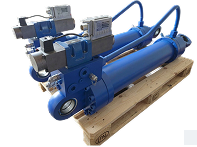
Upgrading worn legacy units with modern high-efficiency units offering higher pressure ratings and extended service life.

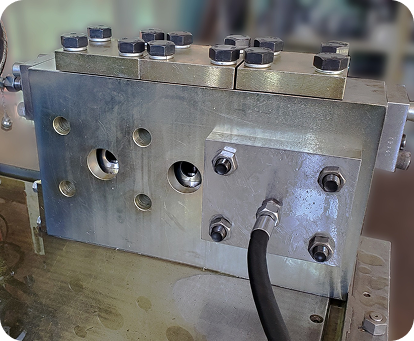
Hydraulic Manifolds & Valves

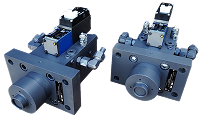
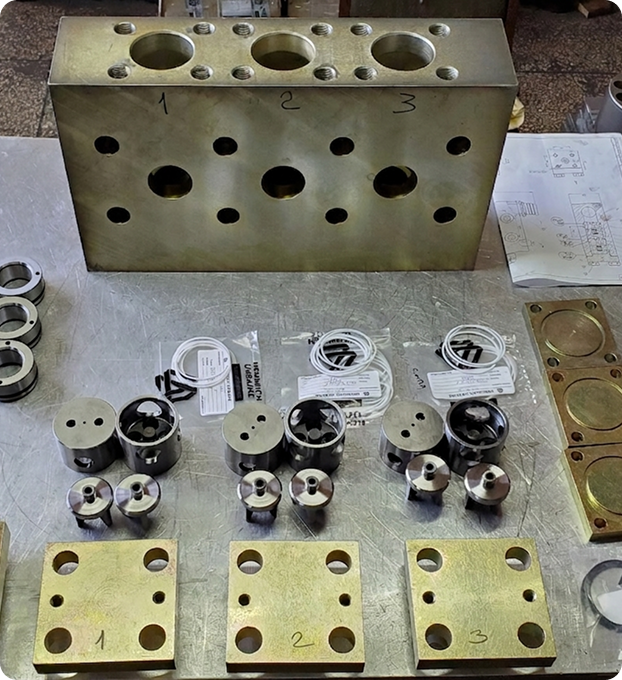
Replacing antiquated discrete valves with compact integrated manifolds and proportional/servo valves for superior precision.

Electronic Automation

Integrating programmable logic controllers (PLCs) pressure/temperature transducers and SCADA interfaces for digital process control.

Why Choose Promgidropryvod for Hydraulic Modernization?

Our Modernization Process

01

Audit and Diagnostics

Field engineer visit, baseline condition assessment, operational duty review, and drafting of the technical specification (TOR).

02

Engineering & Design

Developing functional hydraulic schematics, component sizing, 3D manifold/piping modeling, and formal project sign-off.

03

Fabrication & Procurement

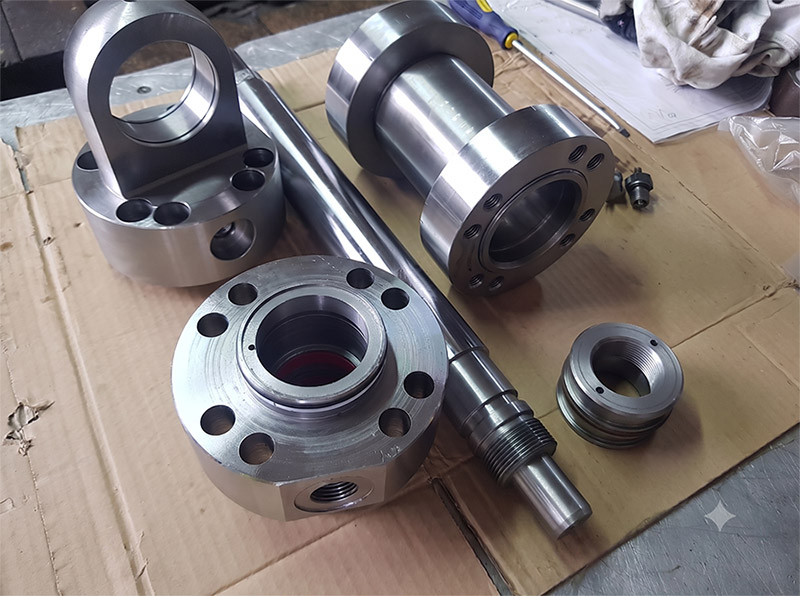
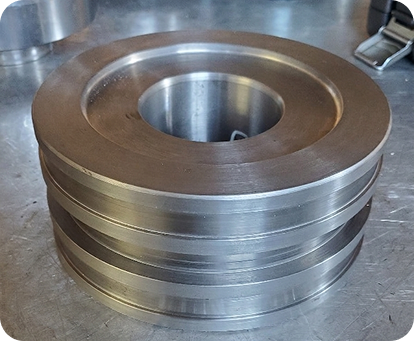
In-house machining of intermediate mounting plates/brackets and procurement of genuine OEM hydraulic hardware.

04

Dismantling & Mechanical Installation

Tear-out of obsolete assemblies, mounting of new equipment, fluid hardline piping routing, and electrical connection.

05

Commissioning and Proof Testing

System startup, pressure/flow calibration, operational parameter checks, and PLC automation tuning. (Detailed on the Supervision of Installation & Commissioning page).

06

Warranty & Technical Support

Full warranty coverage on engineering services, installed hardware, and retrofitted assemblies.

Frequently Asked Questions

When is modernization more advantageous than complete machine replacement?

Modernization is economically optimal when the machine’s primary structural frame and mechanical core remain sound, but the hydraulic power or control systems are worn out or technologically obsolete. In such cases, upgrading pumps, manifolds, or control electronics is typically 2 to 5 times less expensive than purchasing an entirely new machine.

Modernization is economically optimal when the machine’s primary structural frame and mechanical core remain sound, but the hydraulic power or control systems are worn out or technologically obsolete. In such cases, upgrading pumps, manifolds, or control electronics is typically 2 to 5 times less expensive than purchasing an entirely new machine.

Modernization is economically optimal when the machine’s primary structural frame and mechanical core remain sound, but the hydraulic power or control systems are worn out or technologically obsolete. In such cases, upgrading pumps, manifolds, or control electronics is typically 2 to 5 times less expensive than purchasing an entirely new machine.

Modernization is economically optimal when the machine’s primary structural frame and mechanical core remain sound, but the hydraulic power or control systems are worn out or technologically obsolete. In such cases, upgrading pumps, manifolds, or control electronics is typically 2 to 5 times less expensive than purchasing an entirely new machine.

Modernization is economically optimal when the machine’s primary structural frame and mechanical core remain sound, but the hydraulic power or control systems are worn out or technologically obsolete. In such cases, upgrading pumps, manifolds, or control electronics is typically 2 to 5 times less expensive than purchasing an entirely new machine.

Modernization is economically optimal when the machine’s primary structural frame and mechanical core remain sound, but the hydraulic power or control systems are worn out or technologically obsolete. In such cases, upgrading pumps, manifolds, or control electronics is typically 2 to 5 times less expensive than purchasing an entirely new machine.

Request Equipment Modernization

Describe your machinery and the specific performance challenges you plan to address through modernization. Our fluid power engineer will contact you promptly to clarify technical requirements and prepare a preliminary techno-commercial proposal.